Book Direct For Best Rates
The History Behind Our Downtown Bed and Breakfast
Located right in downtown St. Augustine, our Bed and Breakfast has a story shaped by the people who lived here and the history that surrounds the area. We enjoy sharing that background with guests who want a deeper sense of place during their stay. The home sits within walking distance of St George Street, the Lightner Museum, and many favorite shops. The mix of history and warm service helps guests feel connected to St Augustine Florida in a genuine way.
Our St. Augustine Bed and Breakfast
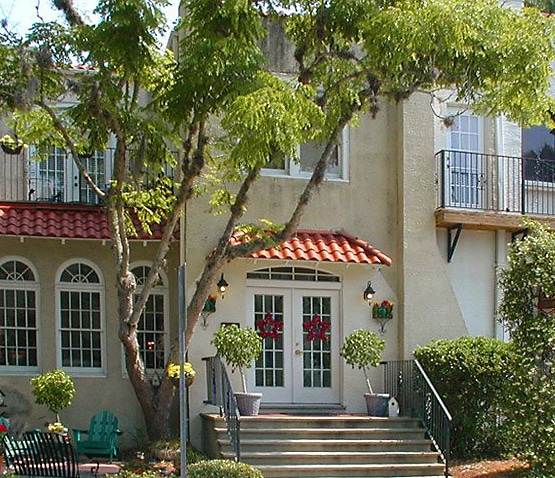
Casa de Sueños is an intimate St. Augustine bed and breakfast inn with a flair and grace that reflect its Spanish design. The asymmetric layout of the interior creates interesting spaces with much variety in their shapes, sizes, and arrangements. Majestic Palladian windows form a large bay, bathing the Dining Room in bright light.
The walls of windows surrounding the West Living Room and East Living Room offer views of our historic St. Augustine neighborhood. Tile floors, iron railings, French doors, and archways accent the distinctive architectural features. Tall ceilings, elegant chandeliers, and an expansive staircase contribute to the dreamy atmosphere, making Casa de Sueños all the more appealing.
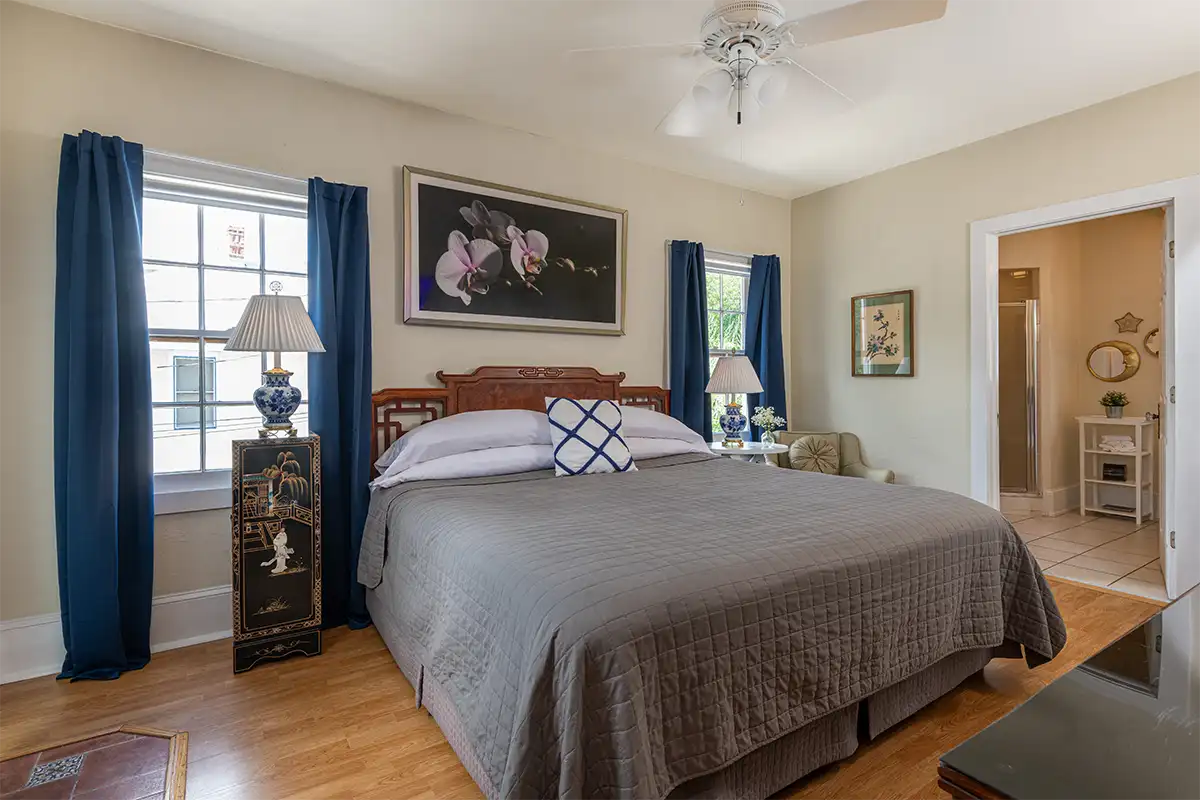
The Casa’s guest rooms are equally eclectic, combining charm with Southern comfort. Guests enjoy discovering which room suits them best. All have private baths, some with jetted tubs. Three of the guest rooms on the second floor feature private balconies with outdoor seating, offering a view of the ancient streets below. One first-floor room also has ramp access, a private entrance, and a triple-sized walk-in shower for accessibility.
Unmatched comfort and convenience
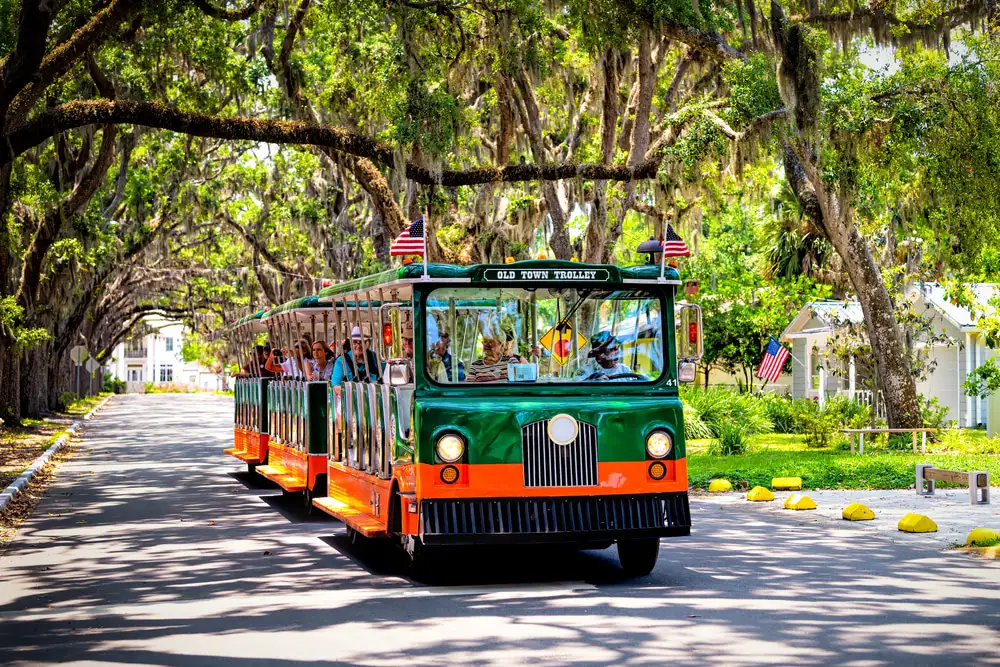
Casa de Sueños offers complimentary guest parking on-site – a luxury in the heart of the Old City. The location of the House of Dreams in St. Augustine’s historic district makes driving unnecessary. Many restaurants and attractions you’ll want to visit are within walking distance, and it is easy to catch a step-on trolley that tours the ancient city streets.
Our History
The Casa’s location on Cordova Street places it on the western border of the 18th-century Rosario Line, an earthen defensive wall built to protect colonial St. Augustine during its First Spanish Period of occupation. The wall, planted with sharp Spanish bayonet plants and cacti, ran 1 mile north and south, then east to the bayfront. St.
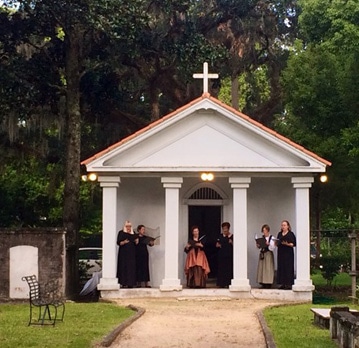
Augustine’s walls protected the old city from British invasion. Tolomato Cemetery, located just north of the same block as the Casa, is situated on the site of a refugee Indian mission, La Natividad de Nuestra Señora de Guadalupe de Tolomato, one of five small villages established by the Franciscans in the early 1700s to shelter Indians fleeing British attacks in other parts of Florida.
A portion of the cemetery was set aside for formerly enslaved Americans who had converted to Catholicism after escaping bondage in the Carolinas by fleeing to the Spanish-held city. Some Minorcans laborers (as well as Greeks and Italians and those from other areas of the Mediterranean), who had survived and escaped to St. Augustine from a failed indigo plantation in New Smyrna Beach, Florida, in 1777, were allowed to be buried in the cemetery, as were soldiers from both sides of the US Civil War.
In a city where many things are identified as the “oldest,” Tolomato is the oldest extant planned cemetery in Florida, having been in use as a cemetery since 1777. It was closed to new burials in 1884. Still, it preserves its connection to remarkable moments and individuals in the history of St. Augustine and the Catholic Church in Florida.
Our Lodging Properties & Area Attractions
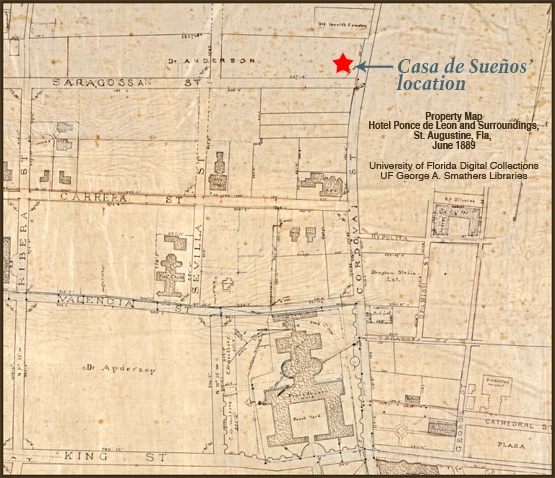
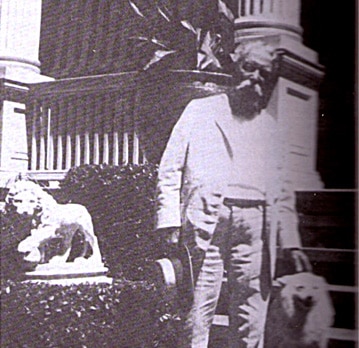
A property map of the Ponce de Leon Hotel and its surroundings from 1889 (shown below) shows bare land held in the name of Dr. Anderson where Casa de Sueños now stands . Dr. Andrew Anderson (1839-1924) was a physician, philanthropist, and mayor of St. Augustine. He commissioned multiple works of art for public spaces in the city, including the two carved marble lions at the city’s approach to the famed Bridge of Lions and the life-size statue of Ponce de Leon in the traffic circle at the east end of the Plaza.
The doctor’s plantation included a large tract of land between the San Sebastian River and Maria Sanchez Creek, where he built his home, Markland House (now part of Flagler College, on King Street). He became a partner in the St. Augustine Hotel, the city’s most opulent hotel in the 1880s. Anderson is said to have inspired Henry Flagler’s vision of St. Augustine as a winter playground for the rich. In 1885, Anderson sold his land east of Markland, which was an orange grove, to Henry Flagler for the construction of the Ponce de Leon Hotel (now Flagler College) and the Alcazar Hotel (now City Hall and The Lightner Museum).
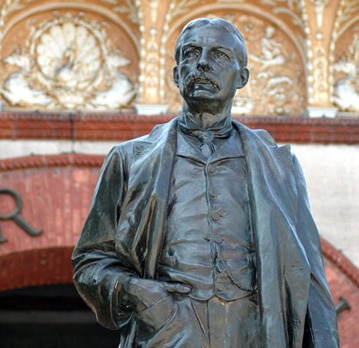
St. Augustine’s architecture reflects its rich history, and Casa de Sueños is particularly remarkable, both for its architecture and its location. It was likely built as a one-story wooden frame residence around 1904 on land that was part of the Model Land Company, the real estate arm of Henry Flagler (1830-1913), a multi-millionaire industrialist and co-founder of Standard Oil. Flagler was a key figure in the development of Florida’s Atlantic Coast and put St. Augustine on the map as a tourist destination with the opening of his opulent 540-room Ponce de Leon Hotel (now Flagler College, just a short walk from Casa de Sueños) in 1888.
The neighborhood where the Casa de Sueños was initially built as a private residence is said to include homes once owned by some of the city’s most prestigious residents. One of the Casa building’s early residents was George A. Colee, whose family started a long-running horse carriage company in St. Augustine in the 1880s. In a interesting coincidence, the 1894 House, which is another of the Finnegan’s properties, the earliest resident was Ambrose Colee, another member of the Colee family and co-owner of the horse carriage company.
The residence had an ambitious expansion during the early 1900s when members of the Carcaba family called it home. Family patriarch P.F. Carcaba, a native of Oviedo, Spain, had come to St. Augustine in the late 1800s after starting and operating a successful cigar manufacturing operation in Cincinnati. He was a tobacco expert who regularly journeyed to Cuba to buy select leaves. He produced pure Havana “Caballeros” in boxes covered with images of Henry Flagler’s hotels.
The production of top-grade cigars by hand reached its peak in St. Augustine during the years immediately following World War I. The family-operated Solla-Carcaba Cigar Factory was built around 1909 on nearby Riberia Street. This 3-story brick building was listed in the U.S. National Register of Historic Places in 1993 and stands as St. Augustine’s oldest surviving central industrial building, the last remnant of the city’s cigar industry. Prosperity enabled the Carcaba family to extensively renovate the Casa building, adding wide Palladian and bay windows, red tile roofs, balconies, arched doorways, and stucco exteriors. This gave the building its distinctive Mediterranean Revival styling, which remains so today. The Casa building served as the Garcia Funeral Home in the mid-1900s. In the 1970s, it was operated under the auspices of the St. Augustine Association for Retarded Citizens and later converted into offices.
Casa de Sueños was established as an inn by owners Ray and Sandy Toole in 1998. From 2001 to 2015, the lovely bed and breakfast was owned and operated by Kathleen Hurley, who garnered rave reviews from her guests. Since the autumn of 2015, Casa de Sueños has been one of Joe and Margaret Finnegan’s outstanding lodging properties in the St. Augustine area. For over 35 years, the Finnegans have been the owners and innkeepers of the nearby St. Francis Inn, just five blocks away from Casa de Sueños. Under the Finnegan’s ownership, both Inns have been hand-selected as members of the elite Select Registry Inns of Distinction, passing a quality assurance program with challenging standards that assures their guests of an exceptional experience. The Finnegans’ additional guest offerings include a variety of vacation accommodations including the 1894 House, a Victorian home with two full apartments, a harbor-side condominium at Camache Island marina called Harbor 26, and most recently, the planned addition of the San Sebastian River Houses.
This is a title
Lorem ipsum dolor sit amet, dolor erat ac accumsan nulla, iaculis magna neque amet convallis. Id donec litora nullam praesent, orci velit morbi eget enim, dui amet nulla tempus mauris. Velit nulla eu volutpat, eget urna amet massa. Enim vestibulum nunc massa, erat vel vestibulum aenean, lacus elit mauris dolor eget, quam vestibulum ipsum non. Tenetur lacinia luctus phasellus, penatibus nunc mauris nulla, volutpat turpis sem ipsum iaculis, sed accumsan velit in ut.
Perfect location in Old Town St. Augustine.
Easy stroll to everything. Top quality B and B with everything one expects. Wonderful historic building, small number of rooms, quiet, on-site parking, happy hour drinks and snacks, a real breakfast, dessert each eve, passes to attractions, bicycles, inn keeper always there to help.